Hardware can only get so much done on its own. I had the sky guider, a camera, and a lens. But I didn’t know what I was doing.
The live view of my camera couldn’t see the stars. At least, not with the 200mm lens I had. But I could see them with the smaller kit lens. I wanted to see some galaxies though.
I began to realize that I was always out of focus. Auto focus needs light to work, and a dim star just won’t do it. After a night or two of failing, I took my problem to the internet. “How to I focus on the stars”. I found so much information, and a lot of it just didn’t apply to me yet. “How do I set focus with a dlsr when imaging the stars”. Turned up better results, and the key insight was to turn the ISO to it’s max setting, make sure Aperture was set to wide open (f/4.2 in my case, with the zoom lens at its max 200mm), and take a 5 second exposure.
And there on the preview screen I could see fuzzy white circles. Stars.
I repeated the process, adjusting the focus ring of the lens each time until the starts were as small as I could make them on the preview screen. Then I polar aligned the sky guider, centered the camera on a bright start and took a few images. This is what I got!
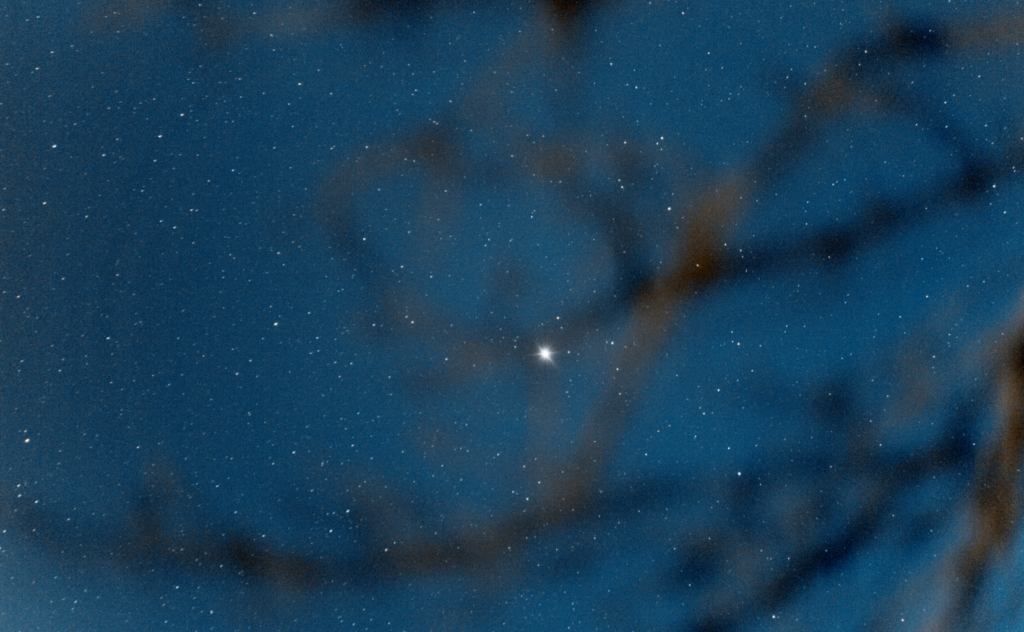
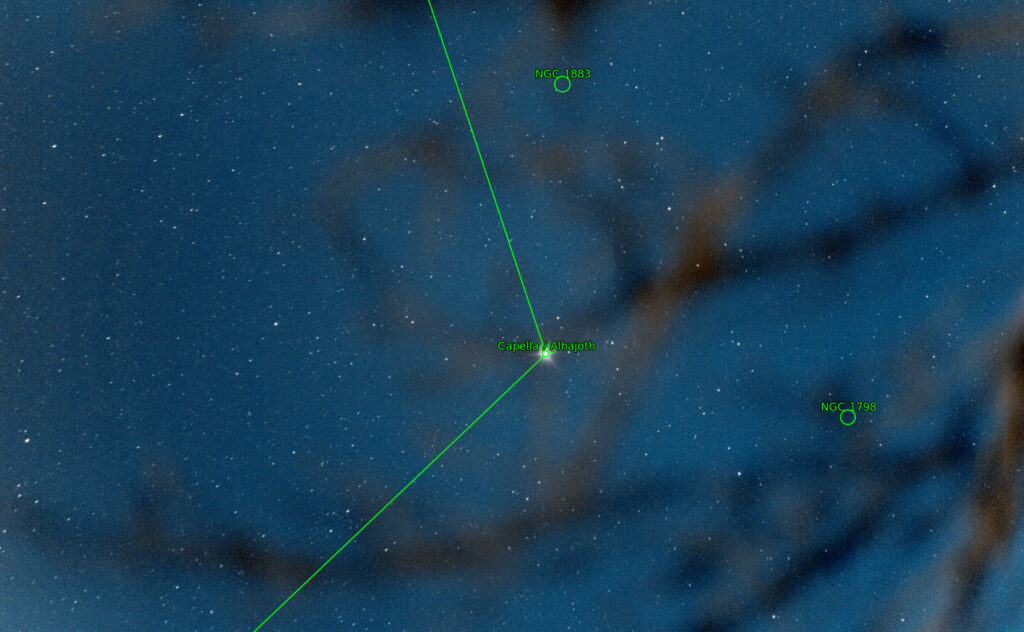
It turns out, you can take your pictures of the night sky and submit them to a service to figure out where in the night sky your image is taken. Here is the annotated version of that image:
Leave a Reply